Redding Countertop Guide
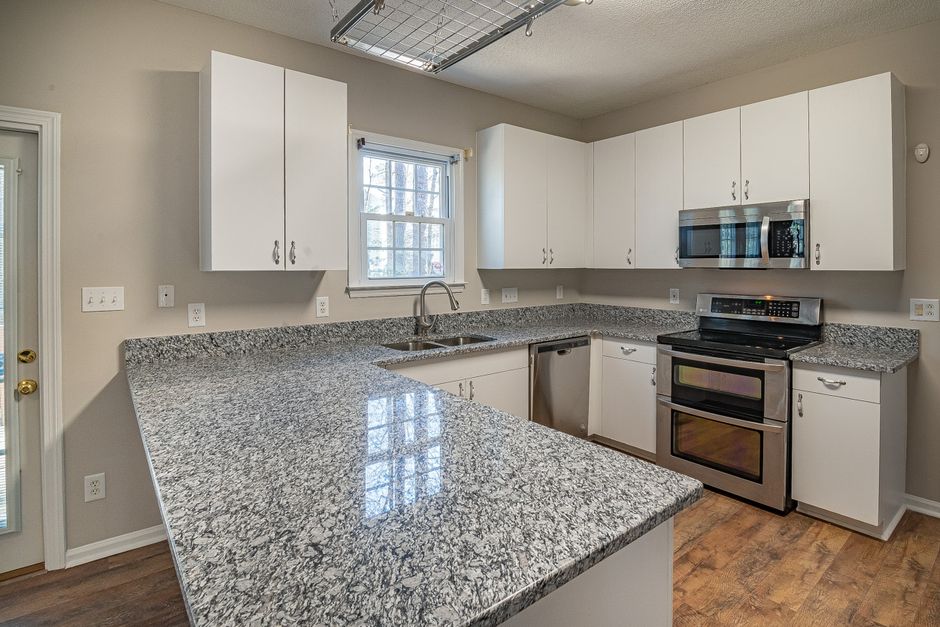
A working guide to countertop choices in Redding: edge profiles and what they add to a quote, and how each sink type meets the stone.
A Countertop Guide for Redding Homeowners
Countertop shopping starts with colour and ends with a contract full of terms nobody explained. This guide works through the decisions in the order they actually get made, which is rarely the order the showroom presents them in.
The Decisions That Cost Money
Material is the obvious one. After that come the edge profile, the sink type, the backsplash treatment, the number of seams and whether the old tops are yours to remove. Each of those moves the total by a meaningful amount, and each is easier to change now than after the template has been taken.
Material Is a Maintenance Choice, Not Only a Look
Granite and marble are porous and want sealing. Engineered quartz does not, but it does not love heat. Solid surface repairs invisibly and scratches easily. Butcher block is warm and needs oil. None of these is the right answer in general, and all of them are the right answer for somebody with a particular tolerance for upkeep.
Local Notes
Shasta County summers are long and dry, and homes here swing a fair amount between seasons. That is one reason installers use flexible silicone rather than rigid adhesive at the backsplash joint: the joint has to move slightly without opening a crack across the wall line.
In This Guide
Below: what each edge profile costs and why, and how undermount, drop in and farmhouse sinks each meet the stone differently.
Latest Guides
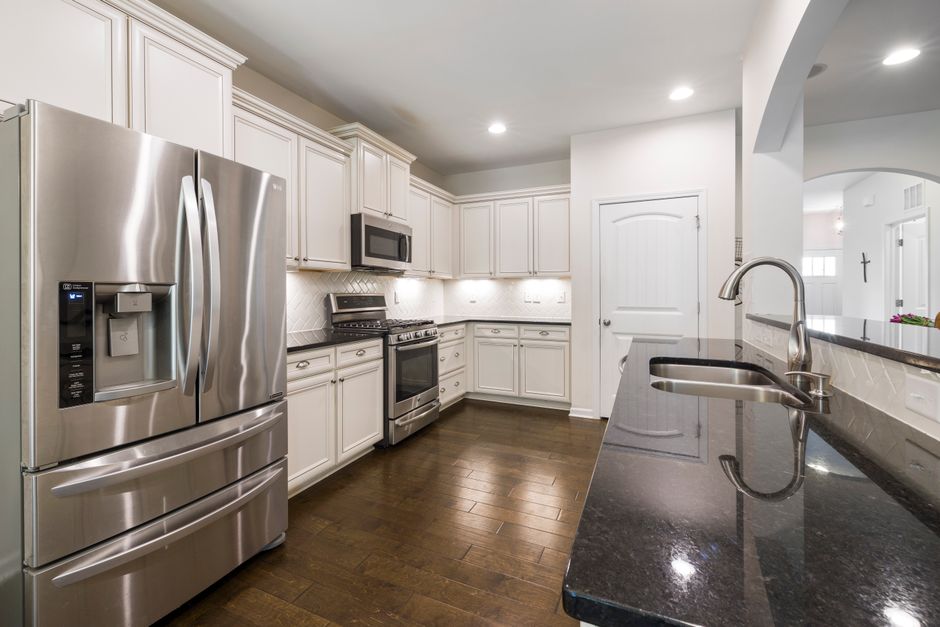
Edge Profiles and What They Actually Cost
2026-09-05
An edge profile is the shape ground into the exposed side of the slab. It is a small detail by area and a large one by contact, because it is the part of the counter your forearms rest on. It is also the line item most often compared incorrectly, because shops group profiles into tiers and the tiers do not match between shops.
The Standard Tier
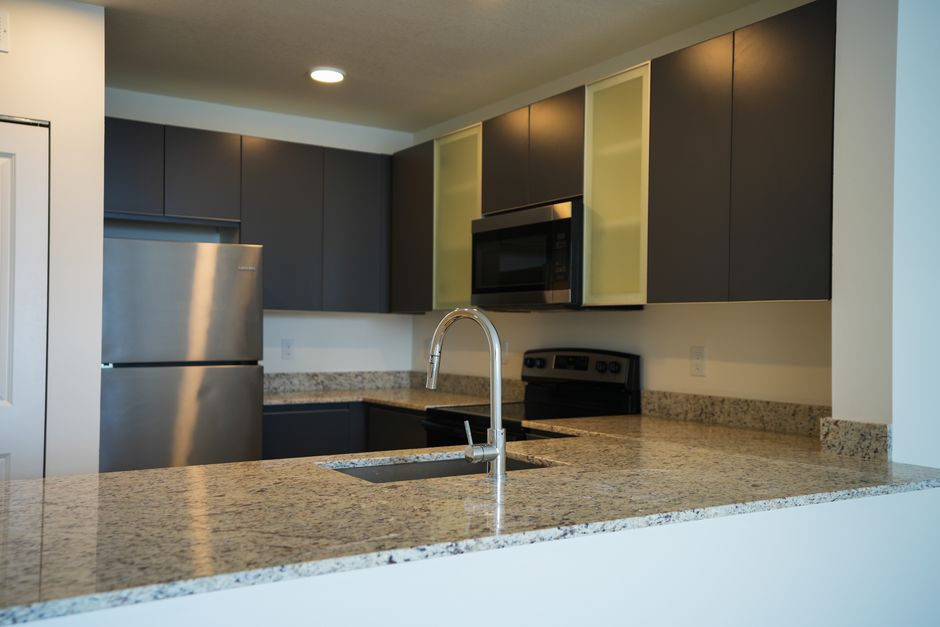
Eased edge, sometimes called a flat polish, is a square edge with the sharpness taken off. Quarter round and half bullnose are the other common inclusions. These are typically priced into the base square foot rate because the machine does them in one pass with a standard wheel.
If a quote says edge included without naming the profile, it means this tier. That is worth clarifying, because an eased edge and a full bullnose look quite different on a thick counter.
The Upgrade Tier
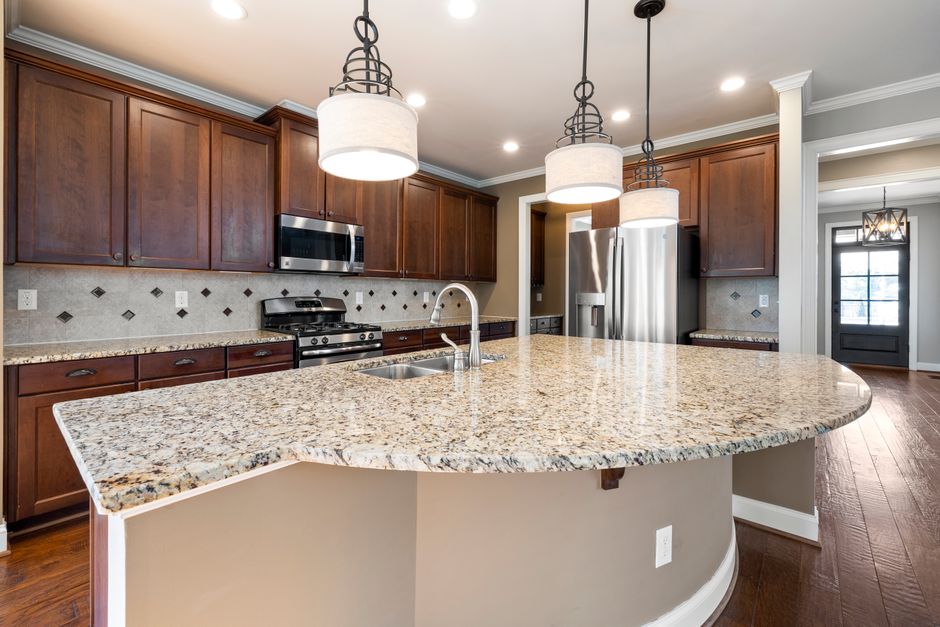
Ogee, dupont, cove dupont and triple pencil edges need multiple passes and often hand finishing at the corners. Expect a per linear foot charge on top of the base rate. On a typical kitchen with twenty five to thirty five linear feet of exposed edge, that adds up quickly, which is why an upgraded edge can move a quote by several hundred dollars on its own.
The Mitred Apron
A mitred edge is the one that makes a three centimetre slab look like a five or eight centimetre slab. Two pieces are cut at forty five degrees and joined so the grain appears to wrap the corner. It looks excellent and it is a fabrication job rather than an edge treatment: extra material, a glued joint that has to be invisible, and more time on the bench. Price it as a separate decision, not as a fancier edge.
Practical Considerations
Deeply carved profiles collect crumbs and are harder to wipe, which matters more in a working kitchen than in a photograph. Sharper profiles chip more easily at outside corners, particularly on granite and marble, and a chip on an edge is the most visible damage a countertop can take. Households with young children usually end up happier with a softer profile.
Getting It Right on the Quote
Name the profile on the contract rather than pointing at a sample board. Confirm whether the price is per linear foot of exposed edge or folded into the square foot rate, and confirm that any island or bar returns are counted. Ask to see the profile on a full size piece if the shop has one, because a four inch sample does not show how a profile reads across a two metre run.
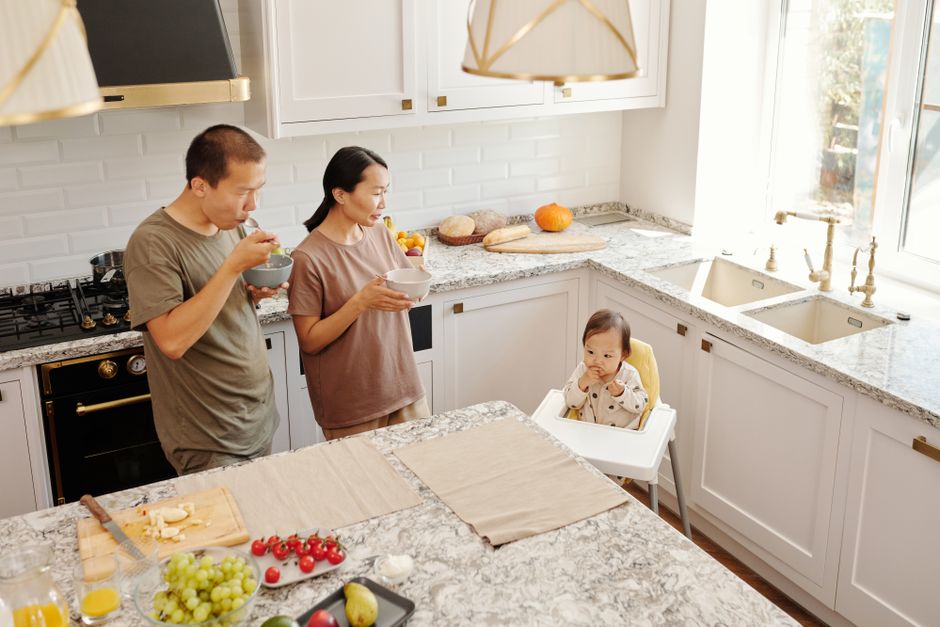
How Undermount, Drop In and Farmhouse Sinks Meet the Stone
2026-09-05
The sink is a countertop decision disguised as a plumbing decision. It sets the cutout, the support requirement, the finished edge treatment and, on some layouts, the seam plan. It also has to be physically present at template, which surprises people who assumed they could pick one later.
Undermount
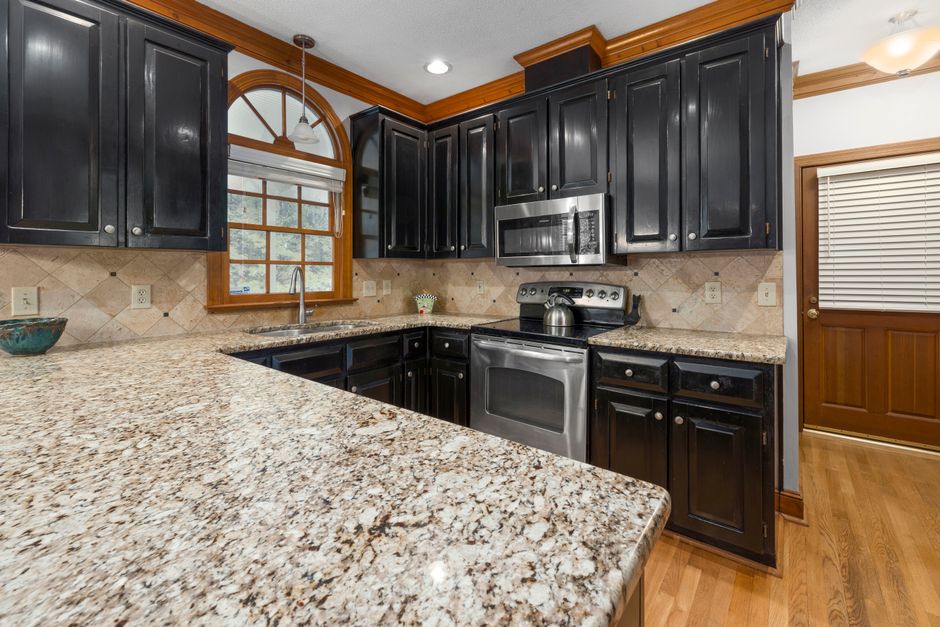
The sink hangs below the stone, so the counter edge around the opening is polished and visible. That polished reveal is a fabrication charge, and the reveal itself is a choice: positive reveal shows a strip of the sink rim, negative hides it, and zero lines the two up exactly. Zero reveal looks the cleanest and is the least forgiving of a millimetre of drift.
Undermounts are held by clips and adhesive under the stone. On a heavy cast iron sink that is not enough on its own, and a support frame or a plywood cradle goes in below. Ask what is carrying the weight, because a sink that pulls away later takes the seal with it.
Drop In
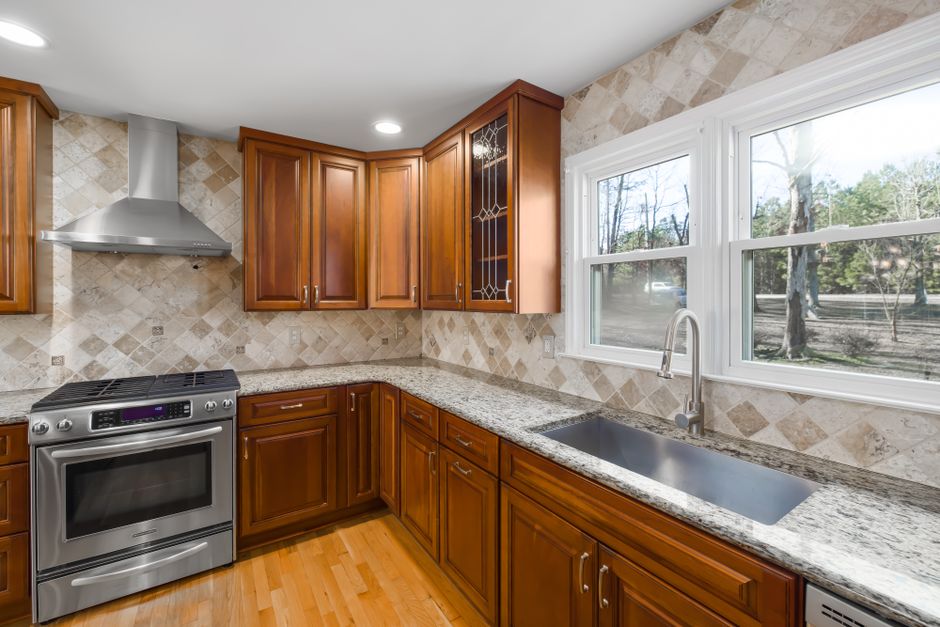
A drop in sits in the opening with its rim resting on the counter. The cutout does not need a polished edge, so it is the cheapest option to fabricate, and the sink carries itself. The trade off is the rim, which collects grime along its silicone line and interrupts a wipe from counter to sink. On laminate this is standard. On stone it reads as a downgrade to most buyers, which is why it is uncommon on new stone tops.
Farmhouse and Apron Front
An apron sink replaces the cabinet face as well as the countertop opening, so it is a cabinetry job before it is a countertop job. The base cabinet is modified or replaced, the sink sits on a built up platform, and the stone is cut to land on the sink rather than over it. The countertop cutout for one is almost always a separate charge, and the exact model has to be on site well before template because the tolerances are tight.
Practical Sequence
Buy the sink first, or at least confirm the exact model number, then template. A substituted sink of the same nominal size can have a different corner radius, and a cutout ground to the wrong radius is not adjustable. Keep the box on site so the installer can check the unit against the template drawing before the stone is set. It takes a minute and it is the last chance to catch a mismatch while the fix is still a phone call rather than a replacement slab.