How Undermount, Drop In and Farmhouse Sinks Meet the Stone
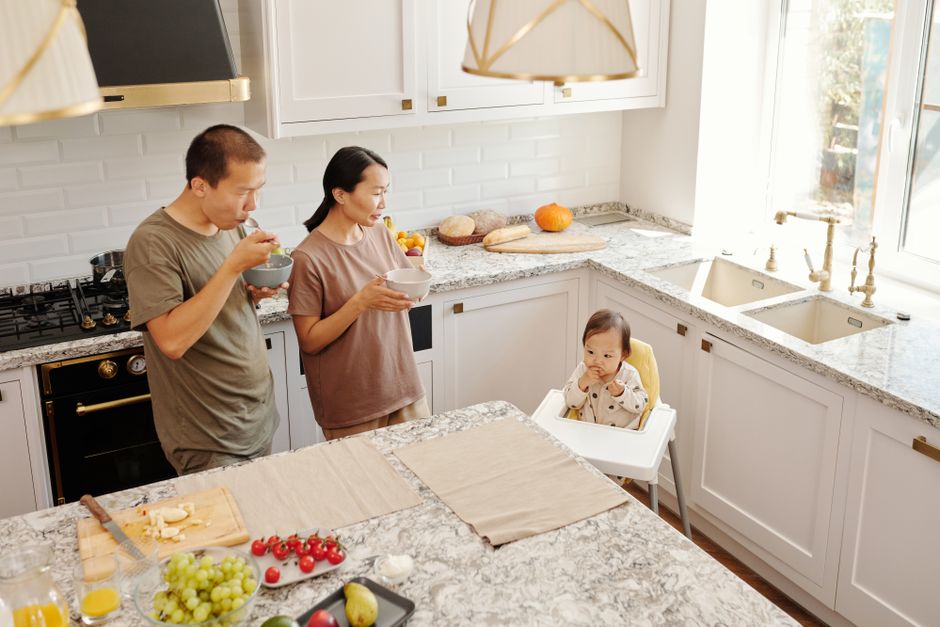
The sink is a countertop decision disguised as a plumbing decision. It sets the cutout, the support requirement, the finished edge treatment and, on some layouts, the seam plan. It also has to be physically present at template, which surprises people who assumed they could pick one later.
Undermount
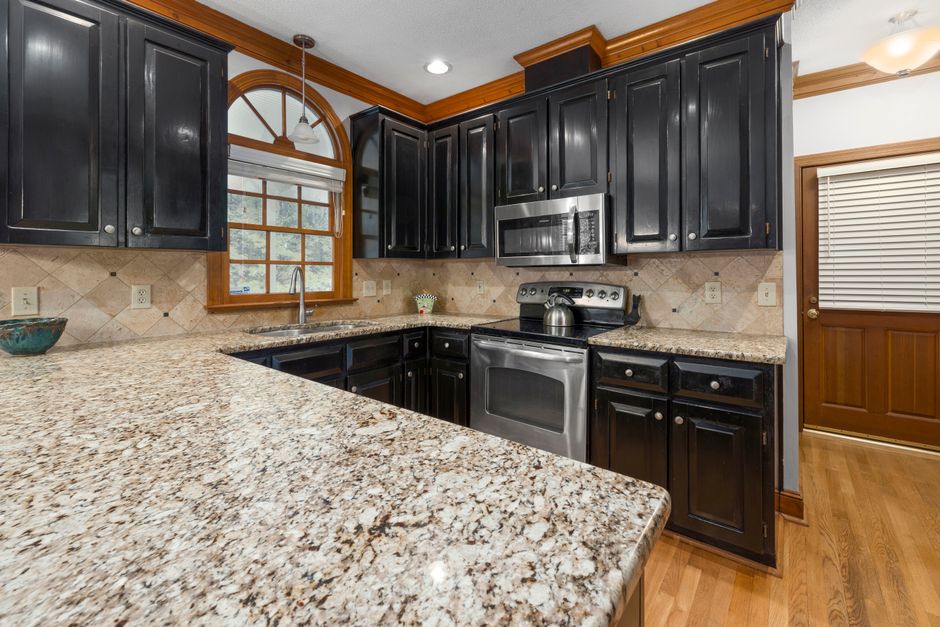
The sink hangs below the stone, so the counter edge around the opening is polished and visible. That polished reveal is a fabrication charge, and the reveal itself is a choice: positive reveal shows a strip of the sink rim, negative hides it, and zero lines the two up exactly. Zero reveal looks the cleanest and is the least forgiving of a millimetre of drift.
Undermounts are held by clips and adhesive under the stone. On a heavy cast iron sink that is not enough on its own, and a support frame or a plywood cradle goes in below. Ask what is carrying the weight, because a sink that pulls away later takes the seal with it.
Drop In
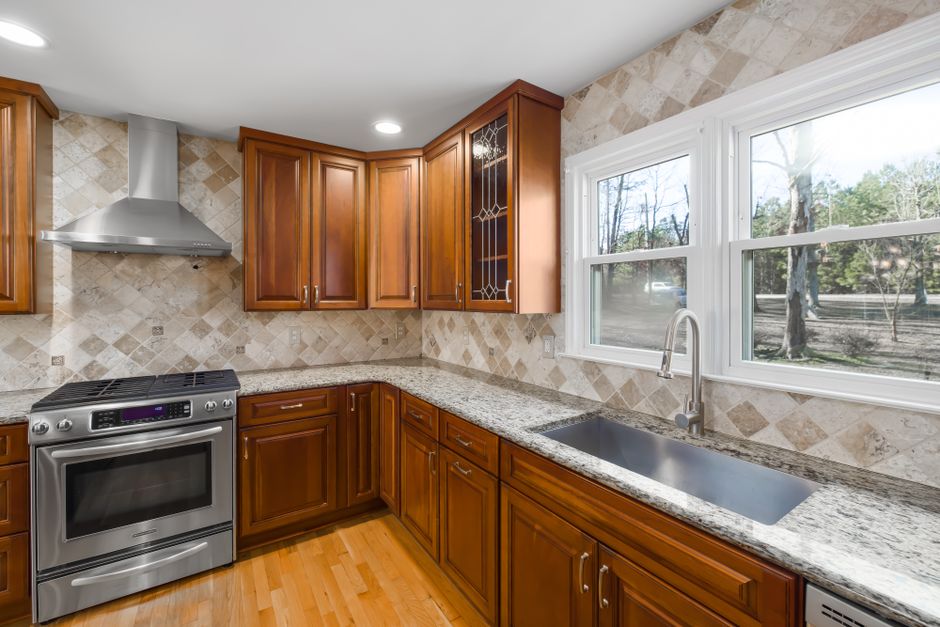
A drop in sits in the opening with its rim resting on the counter. The cutout does not need a polished edge, so it is the cheapest option to fabricate, and the sink carries itself. The trade off is the rim, which collects grime along its silicone line and interrupts a wipe from counter to sink. On laminate this is standard. On stone it reads as a downgrade to most buyers, which is why it is uncommon on new stone tops.
Farmhouse and Apron Front
An apron sink replaces the cabinet face as well as the countertop opening, so it is a cabinetry job before it is a countertop job. The base cabinet is modified or replaced, the sink sits on a built up platform, and the stone is cut to land on the sink rather than over it. The countertop cutout for one is almost always a separate charge, and the exact model has to be on site well before template because the tolerances are tight.
Practical Sequence
Buy the sink first, or at least confirm the exact model number, then template. A substituted sink of the same nominal size can have a different corner radius, and a cutout ground to the wrong radius is not adjustable. Keep the box on site so the installer can check the unit against the template drawing before the stone is set. It takes a minute and it is the last chance to catch a mismatch while the fix is still a phone call rather than a replacement slab.